Search This Blog

Monday, 28 November 2005

Sedona

Slide Rock State Park, Arizona-

Sedona is picturesque. The town is surrounded by towering spires of red rock. It's full of artists, shops and galleries where photographs, paintings, pottery and silver and turquoise jewelry are sold.


We ride the motorbike up to Slide Rock State Park in the morning. The park used to be an apple orchard. The original barns, houses and equipment are on display, including an old waterwheel electricity generator. Mr Pendley's 1912 apple orchard has now been turned into a state park. We self-register and explore the park.


Pendley dug a two-mile system of flumes and tunnels up the mountain to deliver water to the orchard, which is about 100 feet above the adjacent river. This effort took him two years and appeared to be back-breaking work. Red Delicious apples seem to grow best here.
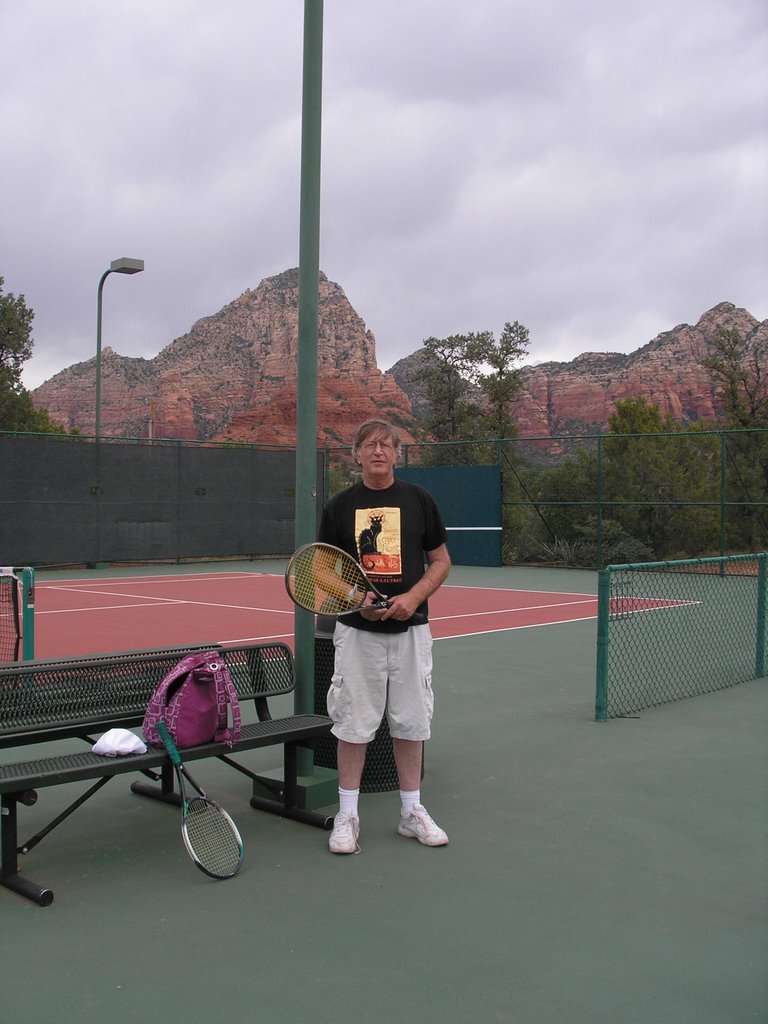


Tennis scores on the municipal court for today are 6-1, 6-2. I lose both sets. I'm obviously distracted by the surrounding scenery.


Later, a five-mile evening trip for groceries on the motorbike in the dark, rain and cold in heavy four-lane traffic adds some spice to the day. I fill my backpack with wine, whole-grain bread, eggs and sliced turkey.


The weather has been near or below freezing in the evenings for the last week. I have a dawn balloon trip over the red rock spires of Sedona booked in the morning to surprise Mrs Phred for her birthday present.


Saturday, 26 November 2005

Mogollon: Ghost Town


Mogollon, New Mexico

The Mogollon ghost town was disappointing, except for the knuckle-biting moments on the one-lane five-mile drive up to the old abandoned mining town. The uphill drive is on the face of a cliff only wide enough for one vehicle over most of the drive. We hope not to have to back up the 30-foot-long RV. We should have driven the motorcycle up this bad road, but Mrs Phred hasn't been on one for thirty years and she still pounds my back to slow down on curves that I could easily take at seventy, wanting me to slow to twenty.


The evening campsite is 25 miles south of the Petrified Forest and Painted Desert. They have fishing, swimming and ancient petroglyphs here. It's a state park on a 1,500 acre lake at 6,000 feet. We climb the rocks in the park looking for the Indian petroglyphs, but find none as darkness falls.


 Tonight we are reading some of the bagful of used paperbacks we bought in Silver City, New Mexico, yesterday. I got three old Norman Mailers (including Tough Guys Don't Dance), a Stephen King, a Dean Koontz and a Robert Bloch. My Faithful Companion picked up a stack as well. There were no books on meditation. The cellular modem works on the picnic table outside the RV and I write about today's travel by flashlight.


Sunday, 13 November 2005

Bandelier & Santa Fe

Santa Fe, New Mexico

Yesterday we spent the morning in Bandelier National Monument to see more Indian ruins.


The most interesting thing about all these parks is the work of the CCC. To join you had to be five feet tall, weigh at least 110 pounds and have three functional teeth. They built to last.


 The ruins have 500 rooms, cave dwellings, wall art petroglyphs and ceremonial kivas. Here are a few Bandelier pictures.


Today we caught a bus and went to an Andy Warhol-Georgia O'Keeffe exhibit at the Georgia O'Keeffe museum. She was an interesting lady. Things were never the same for her after her husband put the nude photos on display in the 1920s.


The downtown shops and the never-ending Santa Fe art galleries on Canyon Road are very unusual. Art is the industry of this town. It's everywhere. It's at bus stops and highway noise barriers and overpasses. All the buildings are adobe style and painted adobe brown with faux logs sticking out near the wall tops to represent an Indian style roof construction.


Friday, 11 November 2005

The Teosinte Hypothesis

Santa Fe, New Mexico


The development of Maize (corn) by early Mesoamerican geneticists probably happened sometime between 10,000 and 6,000 BC in southern Mexico. This development has done more to enable a population explosion to six billion than any other human invention.


From the 1938 to the 1960s, Mangeldorf's 'Tripartite Hypothesis' on the origin of corn was widely accepted. He believed that corn was developed from a cross between an undiscovered wild Maize and the plant Tripsacum.


In 1968, George Beadle, in retirement, began to provide convincing evidence for his own 'Teosinte Hypothesis', which simply believed that Maize was developed from the plant Teosinte. Today scientists generally accept the Teosinte Hypothesis because of advance in the study of genomes.


Chaco Canyon: A Dark Mystery

Chaco Culture National Historical Park,  New Mexico - November 11, 2005


The Chaco people were the true Romans of the Southwest. To visit this park you drive 21 miles each way over a very dusty, bumpy washboard dirt road. My shiny black motorcycle, hanging from the rear bumper, is now caked with an inch of red desert dust and gravel.


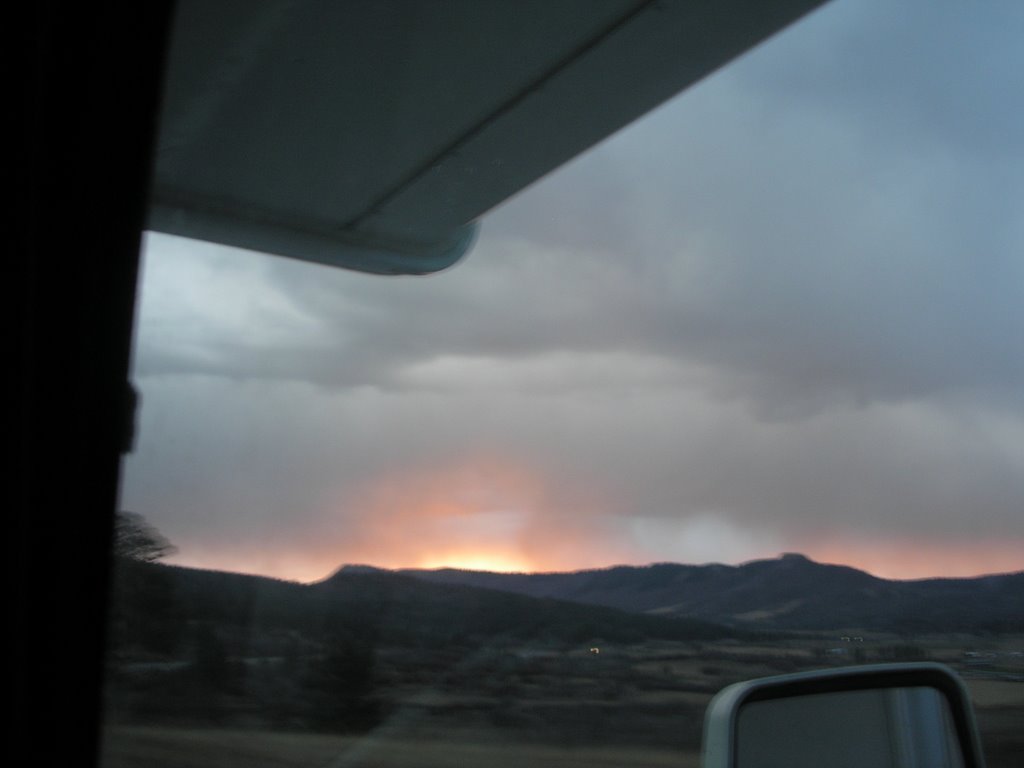
We begin driving at dawn and arrive just in time for the once-a-day 10 AM ranger guided tour. We get a shot of a firecloud as the dawn breaks just under a rainstorm.


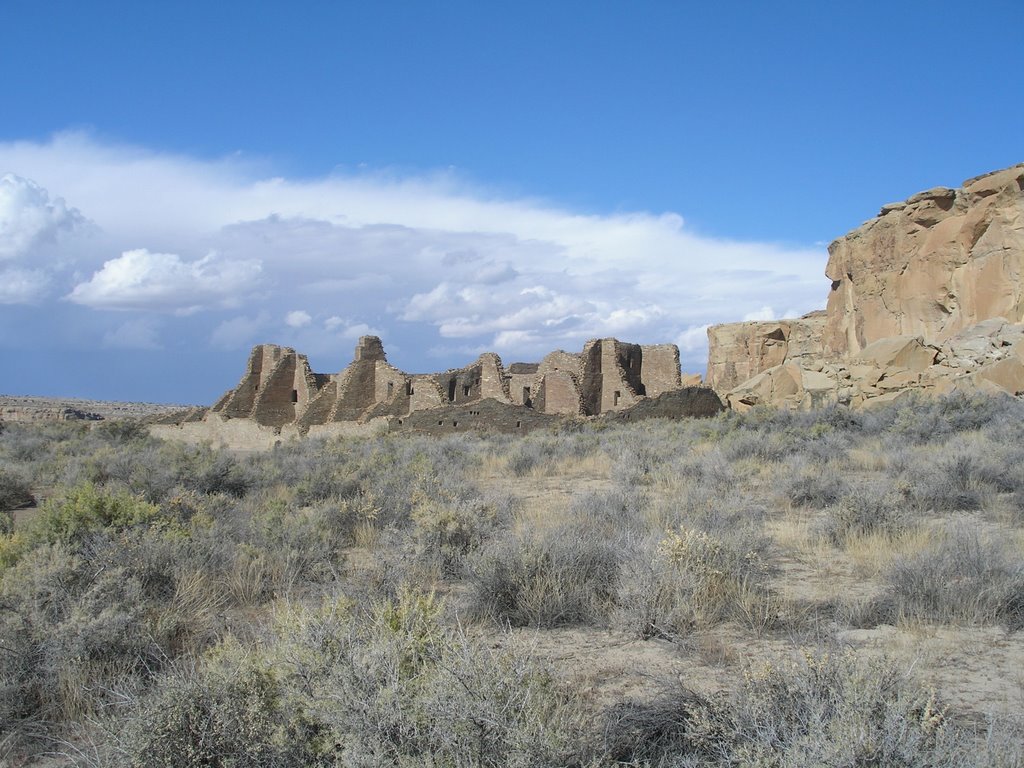
The grand Pueblo has over seven hundred rooms arranged within a graceful semi-circular wall. It is estimated that a million man-days went into the construction of this complex. The tapered walls begin a meter thick and rise to three and four stories with many circular subterranean "Kiva" rooms used for ceremonial purposes. These are about twenty feet in diameter and ten feet deep with a covered roof to retain the smoke and heat. I'm thinking of constructing a smoke-filled Kiva in my backyard as an aid to meditation and vision.


Logs were hauled in from many miles away and sandstone was quarried from high mesa tops to construct this place. Again dendrochronology gives exact construction and occupation dates (about 850 AD to about 1250 AD). The Chaco also built a star pattern of five straight 30-foot wide roads radiating out into the desert nearly sixty miles. They did not deviate for terrain features and simply built up and over surrounding mesas. The purpose of these roads is unclear but something about them seems much more than utilitarian.


 Something very dark may have happened here around 1250 AD. The Chaco set fire to this magnificent desert palace and moved away, leaving only the walls standing. In 1941, the canyon wall behind the Pueblo caved in and destroyed fifty rooms. One of the Chaco Indians buried in the Pueblo's floor was apparently someone very special since he was covered with 25,000 pieces of turquoise, including a bracelet with 2,400 turquoise pieces. Tonight we are camped in the Lake Fenton State Park in New Mexico. We drove hours along an unimproved mountain gravel road to get here in the misguided notion that the shortest way to Santa Fe should be a straight line though the mountains and the Santa Fe National Forest. Nice drive anyway.